
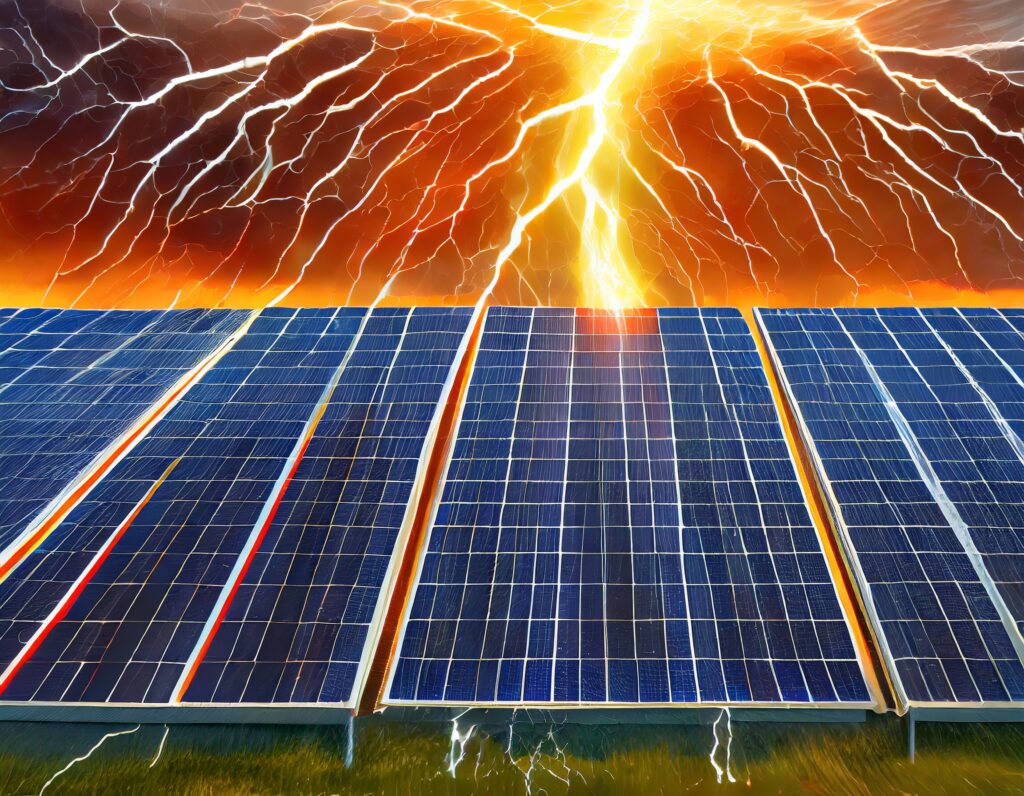
With climate change and global warming knocking hard on our doors, we’re seeing increased urgency in the transition to renewable energy. Solar panels and wind turbines, for example, are becoming increasingly popular, contributing more and more to our grid year-on-year.
However, there’s a catch. The equipment and infrastructure are usually exposed, high up and away from the ground or water. Thanks to this, these systems are especially vulnerable to lightning strikes, which can lead to damage fires, and catastrophic failures.
Because of this, integrating lightning protection measures with renewable energy systems is crucial. Without defences against this natural phenomenon, we might see our carbon-neutral objectives quite literally go up in smoke.
Renewable energy systems: lightning strike vulnerabilities
Renewable energy installations usually get built or placed in open areas. These might include fields, rooftops and offshore locations. Although this gives them greater access to more intense sun and wind, these locations increase exposure to lightning strikes.
Unfortunately, it’s not just the location we have to worry about. Since they generate electricity, solar panels and wind turbines naturally contain many conductive materials, such as copper wiring, aluminium frames and steel structures. These make it much more likely for lightning leaders to develop, facilitating a strike. Large surface areas (such as blades or panels) also increase the likelihood of a strike.
Lightning strikes can cause fires, equipment damage and localised failures. They lead to downtime, and repairs can be so expensive that they aren’t cost-effective. With all this in mind, integrating lightning protection measures into these systems’ installation, design and maintenance is critical for their durability and efficiency.
Strategies for incorporating lightning protection
Thankfully, there are many strategies you could incorporate into your renewable energy systems.
One of the most effective is surge protection devices. These restrict the excess voltage from lightning strikes, limiting and keeping that overwhelming energy and heat away from sensitive components. Protecting against lightning strikes requires these devices to be installed in electrical panels, inverters and other critical internal components. There are three main types: metal oxide varistors (MOVs), gas discharge tubes (GDTs) and silicone avalanche suppressors, sometimes known as transient voltage suppressors (TVSs).
Another (even more widely used) strategy is to provide alternative earthing pathways for a lightning strike to travel down. This is the logic behind the good old-fashioned lightning rod, and it’s still an effective solution today. These measures require air terminals (lightning rods), bonding conductor strips and panels, and grounding electrodes.
You could also implement specialised shielding materials to protect renewable energy systems from lightning strikes. These materials absorb and disperse the energy, reducing the risk of damage to the more critical parts.

Importance of regular maintenance and testing
Even with the best lightning protection measures, regular maintenance and testing are essential to ensure continued effectiveness. Over time, lightning protection systems deteriorate due to their exposed positions and subsequent weather. Rust, water intrusion, UV damage and physical breakages all contribute to reduced efficiencies.
Therefore, regular maintenance and testing is critical. Perform regular inspections and checks to identify and address any issues as they arise.
Maintenance activities comprise cleaning, testing and repairing lightning protection components such as air terminals, bonding conductors and surge protectors. A professional lightning protection testing service should carry out testing. This will include checks of resistance, continuity and impedance per British standards and regulations.
Integrating lightning protection systems with renewable energies
The integration of lightning protection measures with renewable energy installations is critical. With effective defences in place, your system’s long-term reliability and safety is assured. Increased average lifespans should also mean you can expect a better ROI from your infrastructure.
Techniques like those mentioned in this article – earthing techniques, surge protectors, shielding materials, regular maintenance and testing – allow installers and owners to safeguard investments and promote the sustainability of renewable energy systems. You’ll also see more significant benefits, including reduced downtime, fewer repair expenses and lower insurance premiums. All this plays a part in enhancing the economic viability of your renewable energy systems.
Lightning protection, then, is a critical consideration for all infrastructure, including renewables like solar and wind farms. Here at Lightning Protection Testing UK, we’ve made it our mission to help organisations like yours maximise efficiency, promote safety and significantly reduce downtime. For more information about how we can help you through risk assessments, system installations, regular maintenance and certified testing, why not connect with us via a free, no-obligation chat?
We look forward to learning more about you and joining you on a journey towards a cleaner – and safer – future.
